

Last 10 Minutes of Class: What to Do That Isn’t Wasted Time
May 5, 2026
How to Create a Motivating Classroom Environment with Growth Mindset Posters
September 15, 2026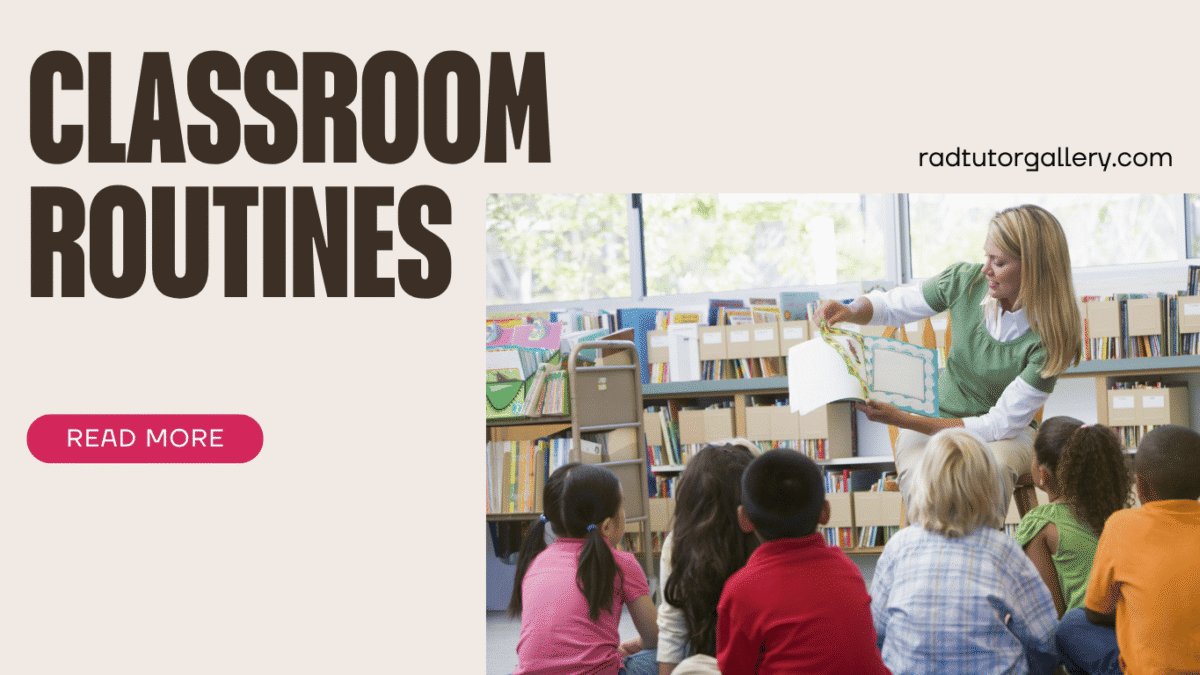
Sit down. Open your notebook. Stop talking. Take out your homework. Start the activity. The typical classroom routines you want to stick with.
And somehow, five minutes later, you are saying the same things again.
Many teachers think students ignore routines because they are lazy or not listening. But often, the problem is not the students. It is that the routines have not been fully built yet.
Strong classroom routines do not happen automatically. They are taught, practiced, repeated, and reinforced over time.
The good news is once routines become habits, your classroom starts running much more smoothly with fewer reminders and less stress.

Start Small Instead of Fixing Everything at Once
One common mistake teachers make is trying to establish too many routines at the same time.
Students cannot remember ten different expectations immediately.
Instead, focus on one or two routines first. Maybe it is how students enter the classroom or what they should do when they finish early.
Keep it simple and repeat it consistently every day.
Once students follow one routine successfully, adding another becomes much easier.
Be Extremely Clear About What You Want
Students need to know exactly what the routine looks like.
For example, saying “be ready for class” is vague. Some students may think that means sitting quietly. Others may think it means opening their notebook eventually.
Instead, explain the routine clearly:
- enter quietly
- sit down
- take out materials
- begin the question on the board
The clearer the expectation, the easier it is for students to follow it.
Practice the Routine Even If It Feels Repetitive
This is the part many teachers skip.
They explain a routine once and expect students to remember it forever.
But routines work best when students practice them repeatedly.
If students enter noisily, stop and try again. Calmly.
It may feel awkward at first, but repetition is what builds habits.
The goal is not punishment. The goal is consistency.
Use Visual Cues Instead of Constant Talking
Students respond well to visual reminders because they reduce verbal overload.
Simple things like instructions on the board, checklists, or consistent signals can help students know what to do without waiting for directions.
For example, if students always see a warm up question on the board when they enter, they eventually begin automatically.
This reduces the need for constant reminders.
Keep Routines Consistent
Routines only work if they happen regularly.
If expectations change every day, students become confused and stop taking them seriously.
Consistency does not mean being rigid. It means keeping core systems predictable.
Students feel more secure and focused when they know what to expect.
Acknowledge the Behavior You Want
Students notice what gets attention.
If teachers only react when students do something wrong, positive behavior often gets ignored.
Simple acknowledgment can reinforce routines naturally.
For example:
- I appreciate how quickly this side started working
- Thank you for getting started right away
This encourages other students to follow along without needing a lecture.
Understand That Routines Take Time
Many teachers give up too early because routines do not work immediately.
But routines are built through repetition over weeks, not days.
Some classes will take longer than others, and that is normal.
What matters most is staying calm and consistent even when progress feels slow.
Over time, small repeated actions become automatic habits.
Practical Tips You Can Use Tomorrow
Choose one routine to focus on first
Give clear step by step expectations
Practice routines instead of only explaining them
Use visual cues students can see immediately
Keep routines consistent every day
Acknowledge students who follow expectations
Stay patient during the early stages
Check also Last 10 Minutes of Class: What to Do That Isn’t Wasted Time – Rad Tutor Gallery
Optional Tools and Resources
You do not need complicated systems to build strong routines.
Simple slides, board instructions, or visual checklists are often enough.
Timers can also help students transition smoothly between activities without repeated reminders.
Conclusion
Strong classroom routines are not built through constant talking or strict control.
They are built through clarity, repetition, and consistency.
At first, it may feel like you are repeating yourself too much. But over time, those repeated actions become automatic for students.
Start small. Stay consistent. And give routines time to grow.
Because when students know exactly what to do, the classroom becomes calmer, smoother, and much easier to manage.
- Art20 products
- Class Management26 products
- English156 products
- Growth Mindset72 products
- History62 products
- Kids6 products
- Math19 products
- Music17 products
- PE19 products
- Science75 products
- Social Studies59 products




1 Comment
Great content! Keep up the good work!