
AI-Resistant Assignments: How to Design Assignments Students Can’t Just Copy
April 24, 2026
Last 10 Minutes of Class: What to Do That Isn’t Wasted Time
May 5, 2026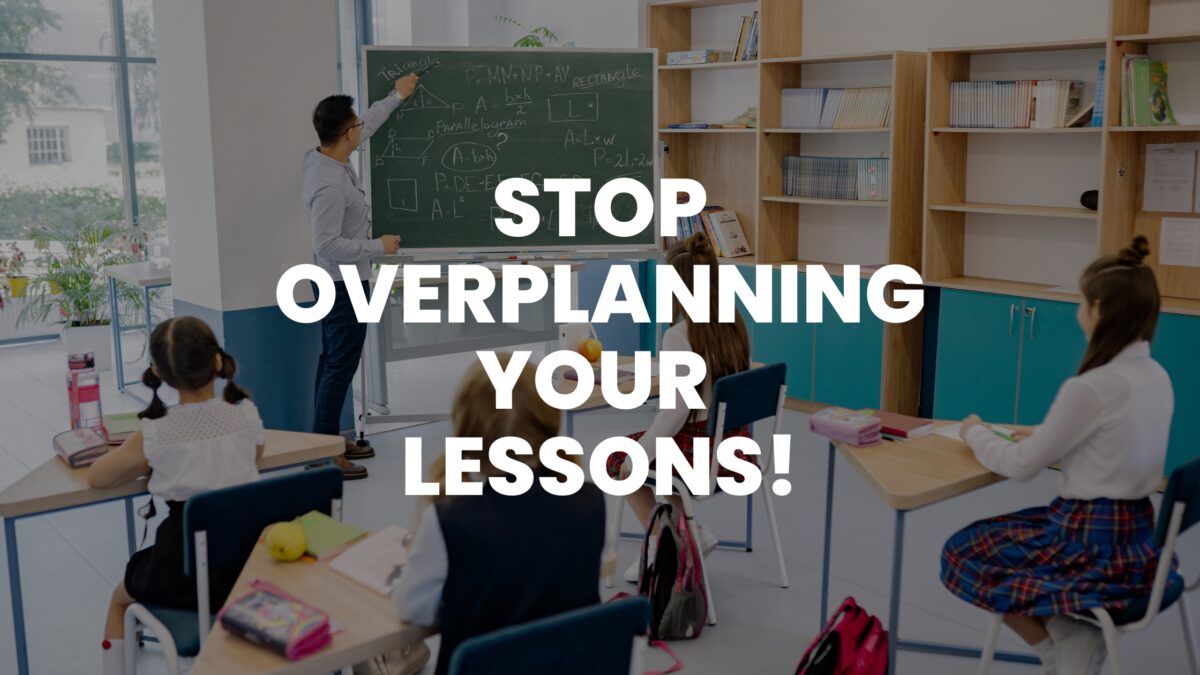
You sit down to plan one lesson and suddenly an hour is gone. You are adjusting slides, rewriting instructions, searching for the perfect activity, and second guessing everything.
By the time you finish, you are exhausted. And the worst part? The lesson does not always go as planned anyway.
If this sounds familiar, you are not alone. Many teachers spend too much time planning because they want everything to be perfect.
But here is the truth. Overplanning often makes teaching harder, not better.
More Planning Does Not Mean Better Learning
It is easy to believe that detailed plans lead to better lessons. But students do not need perfect slides or complicated activities to learn.
What they need is clarity, structure, and opportunities to think.
When lessons are overplanned, they can become too rigid. There is no space to adjust based on how students respond.
Sometimes the most effective lessons are the simplest ones.
Focus on the Outcome, Not the Activity
Instead of asking what activity you should do, start with what you want students to understand.
For example, instead of planning three different tasks, focus on one clear goal.
Ask yourself, what should students be able to explain or do by the end of the lesson?
Once that is clear, you can choose simple ways to get there.
This keeps your planning focused and prevents unnecessary extras.
Use Simple Repeatable Structures
You do not need a completely new lesson format every day.
Having a basic structure saves time and helps students feel more comfortable.
A simple lesson might look like this:
- a short introduction or question
- a quick explanation
- a student activity
- a short reflection
When you reuse this structure, you spend less time planning and more time focusing on content.
Students also benefit because they know what to expect.
Plan Less Content but Go Deeper
Trying to cover too much often leads to shallow understanding.
Instead, choose fewer ideas and explore them more deeply.
Give students time to think, discuss, and apply what they learn.
This not only improves understanding but also reduces the pressure to fill every minute with something new.
Expect to Adjust in the Moment
No matter how detailed your plan is, something will change.
Students may need more time. They may not understand something. Or they may respond differently than expected.
Planning should guide you, not control you.
When you allow space to adjust, your lessons become more responsive and effective.
Not Every Lesson Needs to Be Creative
There is a lot of pressure to make every lesson exciting and unique.
But not every lesson needs to be creative or new.
Simple activities done well are often more effective than complicated ones.
Consistency helps students focus on learning instead of figuring out what to do.
Check also Free No-Prep Classroom Activities for Busy Teachers – Rad Tutor Gallery
Practical Ways to Plan Smarter
Set a time limit for planning and stick to it
Start with one clear learning goal
Use a simple lesson structure you can repeat
Choose fewer activities and focus on depth
Prepare a few flexible questions instead of detailed scripts
Accept that some parts of the lesson will not go perfectly
Reuse activities that already work
Optional Tools and Resources
You do not need complex tools to plan effectively.
A simple notebook or digital document can be enough to outline your lesson.
Templates can help you stay consistent, but keep them simple.
The goal is to support your thinking, not create more work.
Conclusion
You do not need to spend hours planning to teach well.
Clear goals, simple structures, and flexibility are often more powerful than detailed plans.
If planning is draining your energy, it is a sign to simplify.
Try reducing your planning time for your next lesson. Focus on what really matters and let go of the rest.
Teaching becomes much more manageable when you stop trying to make every lesson perfect and start making it practical.
- Art20 products
- Class Management26 products
- English156 products
- Growth Mindset72 products
- History62 products
- Kids6 products
- Math19 products
- Music17 products
- PE19 products
- Science75 products
- Social Studies59 products