
Free Homework Pass Coupons for Teachers | Rad Tutor Gallery
March 16, 2026
How to Use Google Classroom More Effectively | Rad Tutor Gallery
March 20, 2026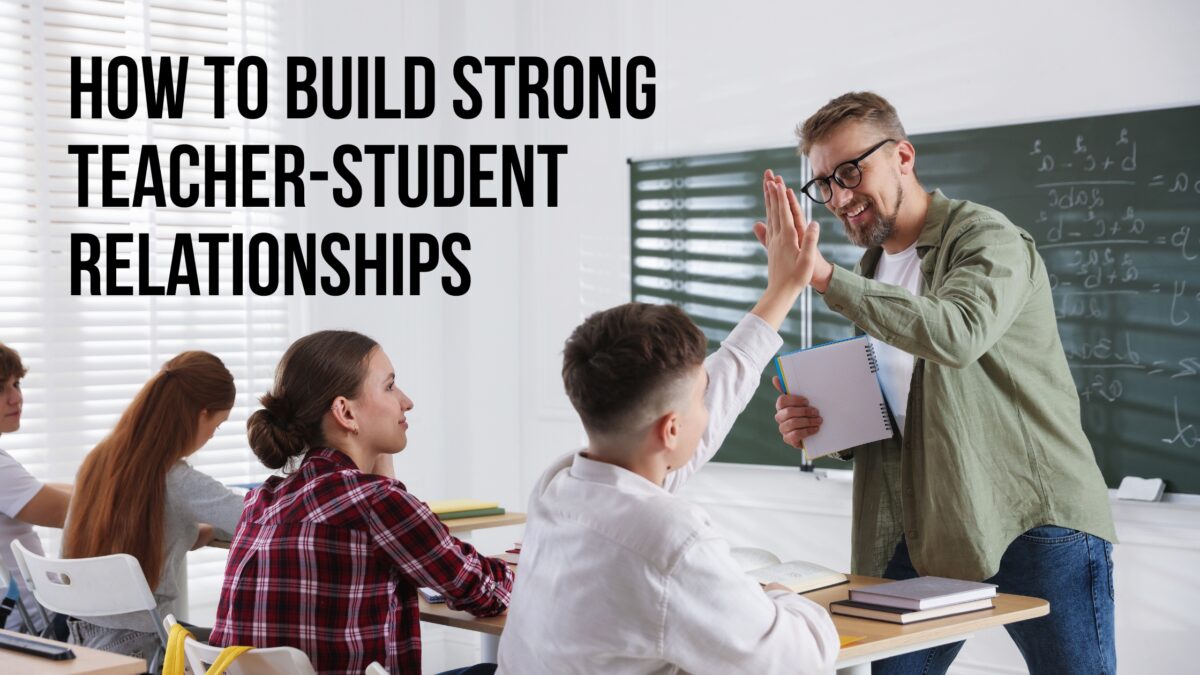
A strong teacher-student relationship is every teacher’s dream. However, you know that moment when you’ve planned the perfect lesson, but your students just… aren’t into it?
The truth is, even the best lesson plans can fall flat without one key foundation: strong teacher-student relationships.
When students feel seen, respected, and valued, everything shifts. Engagement increases. Behavior improves. Learning becomes more meaningful.
In this post, you’ll learn practical, realistic ways to build strong teacher-student relationships without adding more stress to your already full plate.
Why Teacher-Student Relationships Matter
Building strong teacher-student relationships isn’t just a “nice extra.” It directly impacts how students learn and behave.
Research shows that students who feel connected to their teachers are more likely to participate in class, stay motivated, and perform better academically. In fact, a study by the American Psychological Association found that positive teacher-student relationships can significantly improve student engagement and reduce behavioral issues.
Think about it. Students are more willing to try, speak up, and even fail when they feel safe with you.
Start with Simple Daily Connections
You don’t need grand gestures to build strong teacher-student relationships. Small, consistent actions matter more.
Greet students at the door. Make eye contact. Say their names.
For example, instead of a quick “good morning,” try:
“Good morning, Rina. How did your soccer game go?”
It takes just a few seconds, but it tells the student: I see you.
Over time, these micro-interactions build trust naturally.
Learn About Their Lives Beyond Academics
Students are more than their grades.
Take time to learn their interests, hobbies, and personalities. You don’t need deep conversations every day. Even casual check-ins can make a difference.
You might notice a student always drawing in their notebook. Ask about it. Another student might love a certain music artist or game. Use that as a connection point.
In a middle school classroom, one teacher created a “student spotlight” board where each week a student shared their favorite things. It became something everyone looked forward to.
Create a Safe and Respectful Classroom Environment
Strong teacher-student relationships thrive in a space where students feel safe.
This means:
Clear expectations
Consistent routines
Respectful communication
Avoid sarcasm or public embarrassment, even when students test your patience.
Instead of calling a student out in front of everyone, try a quiet, private conversation:
“Hey, I noticed you were having trouble focusing today. What’s going on?”
This approach builds trust instead of fear.
Be Consistent and Fair
Nothing damages teacher-student relationships faster than inconsistency.
If rules change depending on your mood or certain students get special treatment, students notice.
Consistency doesn’t mean being strict all the time. It means being predictable.
For example:
If late work is accepted, apply the same rule to everyone
If you enforce a classroom rule, follow through every time
Students feel more secure when they know what to expect.
Show That You Care About Their Success
Students can tell when a teacher genuinely cares.
Give specific, meaningful feedback instead of generic comments.
Instead of:
“Good job”
Try:
“I can see you really worked on organizing your ideas in this paragraph. That’s a big improvement.”
Also, celebrate effort, not just results. Especially for struggling students.
One high school teacher made it a habit to quietly acknowledge effort after class:
“I noticed you stayed focused the whole time today. That matters.”
Moments like that stick.
Common Mistakes to Avoid
Even with good intentions, some habits can weaken teacher-student relationships.
Trying to be their friend instead of their teacher
Students need guidance and boundaries, not just friendliness
Only interacting with high-performing students
Quiet or struggling students often need connection the most
Using only negative communication
If students only hear from you when something is wrong, trust breaks down
Ignoring small moments
Relationships are built in everyday interactions, not big events
Actionable Tips You Can Use Tomorrow
Here are simple, ready-to-use strategies to build strong teacher-student relationships right away:
- Stand at the door and greet at least five students by name every class
- Ask one non-academic question per lesson
- Keep a quick note of student interests to remember later
- Give one piece of specific positive feedback daily
- Use private conversations instead of public correction
- Check in with one quiet or disengaged student each day
- End class with a simple “thank you for your effort today”
These take minimal time but have a big impact.
Tools and Simple Systems That Help
You don’t need complex systems, but a few simple tools can make relationship-building easier.
A student interest survey at the beginning of the term can give you quick insights.
A checklist can help you track who you’ve connected with during the week, so no one is overlooked.
Some teachers also use reflection slips where students share how they’re feeling or what they need help with. This can open communication, especially for quieter students.
Conclusion
Building strong teacher-student relationships doesn’t require extra hours or perfect conditions. It’s about small, consistent actions that show students they matter.
When students trust you, they’re more willing to learn, participate, and grow.
Start small. Greet them. Listen. Notice the little things.
Over time, these moments create a classroom where students feel safe, supported, and ready to learn.
And that’s where real teaching begins.
If you’re looking for simple classroom resources to support engagement and connection, feel free to check out my shop for posters designed for real classrooms.
- Art20 products
- Class Management26 products
- English152 products
- Growth Mindset70 products
- History59 products
- Kids6 products
- Math19 products
- Music17 products
- PE18 products
- Science74 products
- Social Studies57 products