
English Classroom Posters for Engaging Language Learning
January 31, 2026
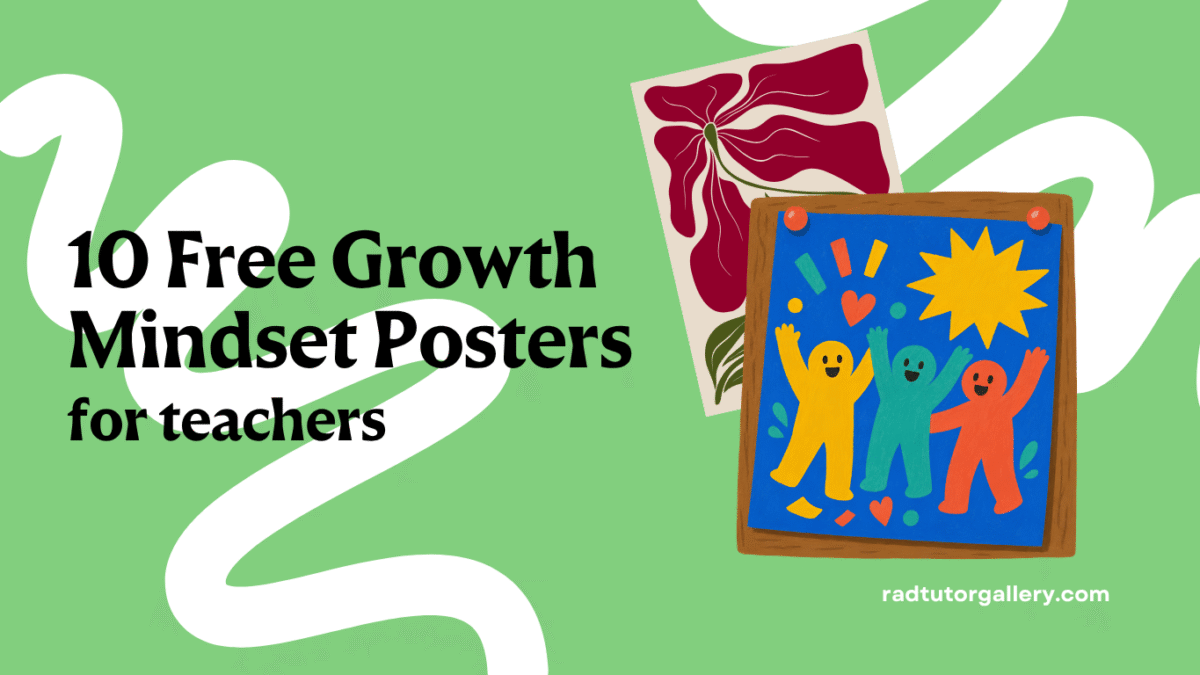
Growth Mindset Classroom Posters for Student Confidence
February 2, 2026
In today’s classrooms, capturing and maintaining student attention is more challenging than ever. Learners are surrounded by fast-moving digital content, which can make traditional instruction feel less engaging. This is where educational posters for classroom use play a powerful role. By combining clear visuals with concise information, posters support visual learning, help students focus, and turn classroom walls into active learning tools rather than passive decoration.
Why Visual Learning Matters in the Classroom
Research and classroom experience consistently show that many students learn best when information is presented visually. Visual cues help learners process complex ideas, recognize patterns, and retain information more effectively. Visual learning posters support this process by breaking down abstract concepts into accessible formats such as diagrams, charts, timelines, and illustrated examples.
When students regularly see key ideas displayed around the room, learning does not stop when a lesson ends. Instead, the classroom environment itself reinforces instruction. Well-designed posters can reduce cognitive overload by highlighting essential information, allowing students to make connections more quickly and confidently.
How Educational Posters Support Comprehension
One of the greatest strengths of educational posters is their ability to simplify complex content. Subjects such as grammar, science, mathematics, and social studies often involve layered concepts that can overwhelm learners when presented only through text. Posters distill these ideas into manageable pieces.
For example, a grammar poster that visually separates parts of speech with color coding helps students identify patterns in sentences. A science poster showing energy transformations through labeled diagrams makes abstract processes easier to understand. By presenting information in this structured way, educational posters for classroom use support comprehension for diverse learning styles and ability levels.
Posters also serve as non-intrusive reference tools. Instead of interrupting a lesson to ask basic questions, students can independently check a poster, encouraging self-directed learning and confidence.
Strengthening Memory and Retention
Memory is closely linked to repetition and association. Posters naturally support both. When students see the same visual information daily, it reinforces learning through repeated exposure. Over time, key terms, formulas, and concepts become familiar, improving long-term retention.
Visual memory is especially powerful when images are paired with short explanations. A timeline poster in history, for instance, helps students associate dates with events spatially. Similarly, a mathematical formula poster placed near the board allows students to repeatedly connect problem-solving steps with visual reminders. This consistent reinforcement makes posters an effective learning aid, not just decorative classroom wall decor.
Boosting Student Engagement Through the Learning Environment
Classroom environment has a direct impact on motivation and focus. Thoughtfully chosen posters can increase student engagement by making the space feel purposeful and inviting. When walls reflect what students are learning, they signal that the classroom is an active learning zone.
Engaging posters can also spark curiosity. A thought-provoking quote, a challenging question, or an infographic-style poster can encourage discussion and critical thinking. Instead of overwhelming walls with too much information, educators can rotate posters based on current topics, keeping the environment fresh and relevant.
Importantly, posters can support inclusive classrooms. Visual aids help English language learners, students with learning differences, and younger learners who benefit from clear, consistent visual structure.
Practical Classroom Examples Across Subjects
Educational posters are highly adaptable and can be used across age groups and subjects:
Language Arts: Posters showing reading strategies, story elements, figurative language, or writing structures help students apply skills independently during reading and writing tasks.
Mathematics: Number lines, problem-solving steps, geometry shapes, and formula charts provide ongoing support, especially during practice and revision.
Science: Diagrams of life cycles, scientific methods, energy forms, or lab safety rules reinforce key concepts and procedures.
Social Studies: Maps, timelines, and cause-and-effect charts help students visualize historical events and geographic relationships.
Classroom Skills: Posters focused on study habits, growth mindset, or discussion norms contribute to a positive learning culture while still supporting academic goals.
In homeschool settings, posters can define learning zones and help structure lessons. For tutors, portable or printable posters allow consistency across sessions and locations.
Choosing and Using Posters Effectively
To maximize impact, posters should be clear, age-appropriate, and directly connected to learning objectives. Overcrowded designs or excessive text can reduce effectiveness. Instead, educators should prioritize clarity, readable fonts, and purposeful visuals.
Placement also matters. Posters should be visible from student seating areas and located where they are most relevant, such as grammar posters near writing spaces or math posters near problem-solving areas. Rotating posters throughout the year keeps content aligned with current units and maintains student interest.
- Art21 products
- Class Management26 products
- English160 products
- Growth Mindset76 products
- History68 products
- Kids8 products
- Math20 products
- Music18 products
- PE20 products
- Science81 products
- Social Studies62 products