
How to Use AI in the Classroom Without Replacing the Teacher
February 20, 2026
Teacher Burnout: Signs, Causes, and Real Solutions That Help
February 27, 2026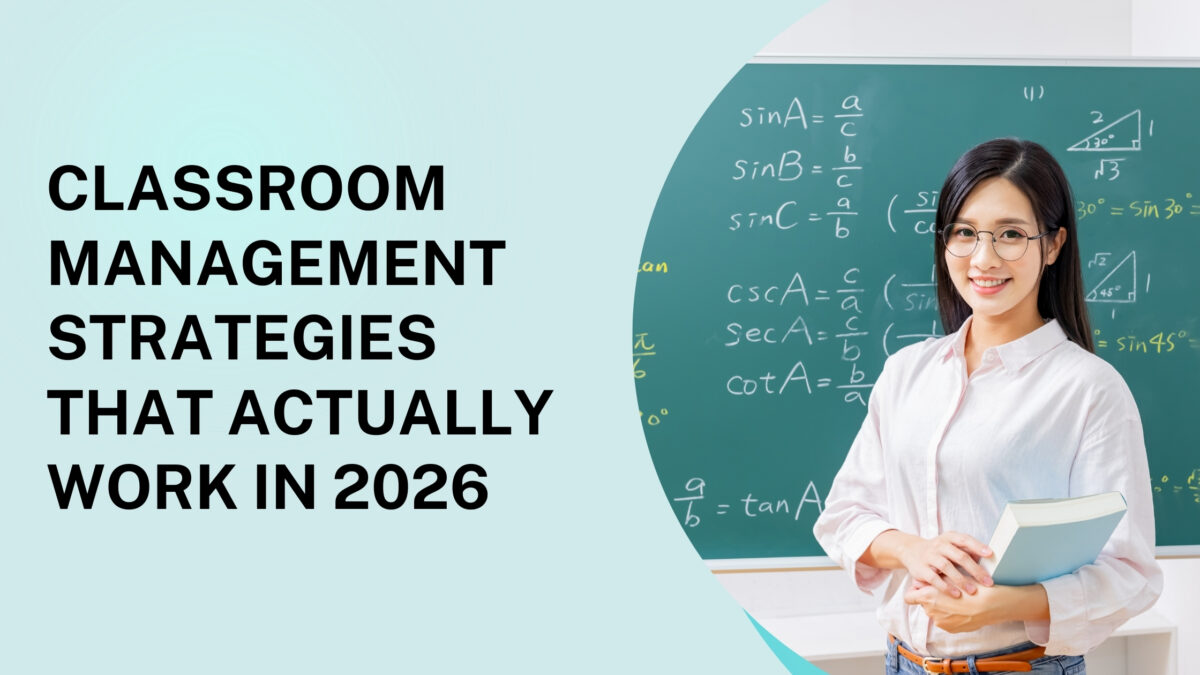
You planned the perfect lesson. The slides are ready. The activity is engaging. And yet within ten minutes, someone is talking over you, two students are off task, and one is staring at a phone under the desk. If this sounds familiar, you are not alone.
Classroom management strategies that actually work in 2026 look very different from what many of us were taught in teacher training. Students are more distracted, more anxious, and more digitally connected than ever. Traditional systems alone are not enough.
In this article, you will learn practical, realistic classroom management strategies that actually work in 2026. These are not theory heavy ideas. They are simple, tested approaches that reduce stress, improve student behavior, and help you feel back in control of your classroom.
Why Classroom Management Feels Harder Now
Let us be honest. Teaching in 2026 is not the same as teaching ten years ago.
Students are navigating:
- Constant digital distractions
- Shorter attention spans
- Increased mental health challenges
- Greater academic gaps
A recent study found that teachers lose an average of twenty percent of instructional time due to behavioral interruptions. That is one full day every week.
This is why modern classroom management strategies must focus on clarity, consistency, and connection.
Strategy 1: Overcommunicate Expectations
Clear Is Kind
One of the biggest classroom management mistakes is assuming students know what you expect.
Instead of saying, “Work quietly,” try this:
- Voice level zero
- Eyes on your own paper
- Raise your hand if you need help
- Finish questions one through five
The more specific you are, the fewer gray areas students can hide in.
In a middle school English class, for example, a teacher might project a checklist during independent reading. Students can visually track what they should be doing. This reduces repeated reminders.
The teacher still decides what each student needs. AI just speeds up the preparation process.
Practice Routines Like Content
Do not just explain procedures. Rehearse them.
Practice how to enter the classroom.
Practice how to transition between activities.
Practice how to ask for help.
Yes, even in high school.
It may feel repetitive, but it saves hours later.
Strategy 2: Focus on Prevention, Not Reaction
Many new teachers spend most of their energy reacting to behavior. Effective classroom management shifts the focus to prevention.
Design Engaging Lessons
Bored students create problems.
This does not mean every lesson must be entertaining. It means students should be actively thinking or doing something.
Examples:
- Think pair share every ten minutes
- Quick writing responses before discussion
- Small group problem solving tasks
When students are involved, off task behavior decreases naturally.
Use Proximity and Nonverbal Signals
You do not always need to stop instruction to correct behavior.
Walk closer to a distracted student.
Make eye contact.
Pause briefly while teaching.
Often that is enough.
Strategy 3: Build Relationships Intentionally
Strong classroom management strategies in 2026 are rooted in relationships.
Students are more likely to follow rules when they feel respected and known.
Simple practices:
- Greet students at the door
- Use their names consistently
- Ask about their interests
- Notice improvement, not just mistakes
In one high school classroom, a teacher started holding short weekly check ins with five different students each Friday. Within a month, disruptive behavior decreased because students felt seen.
Connection is not soft. It is strategic.
Strategy 4: Create Consistent Consequences
Consistency builds trust.
If you ignore talking one day and punish it the next, students feel confused. Confusion leads to testing boundaries.
Instead:
- Clearly outline consequences in advance
- Follow through calmly
- Avoid emotional reactions
For example:
First reminder
Second reminder with seat change
Parent contact after repeated issues
Keep it simple. Stick to it.
Common Classroom Management Mistakes
Even experienced teachers fall into these traps.
Talking Too Much During Corrections
Long lectures rarely change behavior. Keep corrections short and direct.
Public Power Struggles
Avoid arguing in front of the class. If needed, say, “We will talk after class.” Protect your authority without escalating.
Relying Only on Rewards
Extrinsic rewards can help, especially in elementary classrooms. But long term behavior change comes from structure and relationships, not just prizes.
Actionable Tips You Can Implement Tomorrow
Here are ready to use classroom management strategies that actually work in 2026:
- Write and display three to five classroom norms in student friendly language. Review them daily for one week.
- Add a two minute structured warm up at the start of every class to reduce chaotic beginnings.
- Use a visible timer during activities to reduce transition delays.
- Script your response to common disruptions so you do not react emotionally. For example, “Right now we are focused on the task.”
- Track one positive behavior per student each week and acknowledge it verbally.
- Rearrange seating based on behavior patterns instead of waiting for major disruptions.
- End class with a short reflection question to maintain structure until the final minute.
These small adjustments create noticeable change over time.
Helpful Tools for Modern Classrooms
echnology can support classroom management when used intentionally.
Examples include:
- Digital timers displayed on the board
- Classroom management apps that track participation
- Noise level monitor tools projected on screen
- Shared digital agendas so students always know the plan
In an English classroom, a teacher might post the daily schedule in a shared document. Students can check it independently instead of repeatedly asking what comes next.
The goal is clarity and predictability.
Conclusion
Classroom management strategies that actually work in 2026 are not about being strict or being permissive. They are about being clear, consistent, and relational.
Start with expectations. Strengthen routines. Focus on prevention. Build real connections.
You do not need to change everything at once. Choose one strategy and test it tomorrow. Reflect on what improves. Adjust as needed.
You are not failing because teaching feels hard. Teaching is complex.
But with the right systems in place, your classroom can feel calmer, more focused, and more manageable.
And that changes everything.
- Art9 products
- English73 products
- Growth Mindset21 products
- History24 products
- Math6 products
- Music8 products
- Science13 products
- Social Studies17 products