
10 Free Science Worksheets for Middle School
October 27, 2026
Hi there, ESL teachers! Have you ever had students who just don’t seem to want to speak English in class? You ask them a question, try to encourage them, and give them plenty of opportunities to practice. Yet, they still feel shy and respond with only a few words.
Getting students to speak English in class can be challenging, especially when they lack confidence, worry about making mistakes, or simply don’t know what to say. This can be even more challenging when you’re teaching young learners who are still developing their English vocabulary and speaking skills.
However, don’t lose hope just yet! With the right approach, you can gradually help reluctant students feel more comfortable speaking English. The secret is to start small, stay patient, and keep giving them opportunities to practice.
The good news is that you don’t need complicated lesson plans to get your students talking. Here are 10 practical ways to get students to speak English, even the quiet ones.
1. Start with Simple Yes-or-No Questions
Have you ever started a conversation with your students, only to receive a quiet “yes,” “no,” or an awkward smile? This is a common experience for many English teachers. Fortunately, you don’t need to jump straight into long conversations to improve students’ speaking skills.
Instead, begin with simple yes-or-no questions that students can answer without too much pressure. For example, you could ask:
- “Do you like pizza?”
- “Do you play video games?”
- “Did you watch a movie last night?”
- “Do you have a pet?”
These simple questions help students get used to speaking English in a low-pressure environment. More importantly, they give students an easy starting point for classroom conversations.
Once your students become more comfortable, gradually move on to follow-up questions such as “Why?” or “What kind?” This way, you can turn short answers into longer conversations and help students develop their English-speaking confidence step by step.
2. Choose Topics Your Students Love
Another effective way to encourage students to speak English is to talk about things they genuinely enjoy. After all, students are more likely to participate when they have something interesting to say.
You don’t need to know every student’s interests. Instead, choose one familiar topic at a time and connect it to your lesson. Popular topics include video games, movies, music, football, hobbies, pets, and social media trends.
For example, if your students love football, show them a picture of a famous football player and ask questions such as:
- “Who is this player?”
- “What team does he play for?”
- “Why do you like him?”
- “Who is your favorite football player?”
Similarly, you can use pictures of popular singers, movie characters, or video game characters to start a conversation.
You can also let students choose their own discussion topics. By giving them a choice, you make English speaking practice feel less like a classroom assignment and more like a real conversation.
3. Start Small with Simple Sentence Patterns
Sometimes, students stay silent not because they don’t want to speak, but because they don’t know how to express their ideas in English. In this situation, giving them sentence starters can make a big difference.
For instance, write a few simple sentence patterns on the whiteboard:
- “I like _____ because _____.”
- “My favorite _____ is _____.”
- “I think _____ because _____.”
- “In my opinion, _____.”
- “I prefer _____ to _____.”
These sentence starters give students a clear structure to follow. As a result, they can focus on expressing their ideas instead of worrying about how to begin.
Next, encourage students to use vocabulary they have already learned. If you’ve recently reviewed words related to hobbies, food, or daily activities, ask them to include those words in their answers.
At first, short sentences are enough. As students gain confidence, you can gradually challenge them to add reasons, examples, and personal opinions.
To support vocabulary development, you can also display useful English vocabulary posters in your classroom. For example, check out our Synonyms for Overused Words Set: Printable Classroom Posters, which can help students explore alternative ways to express their ideas.
4. Play Hot Seat or Charades
Let’s be honest: sometimes, students need a little fun before they’re willing to speak English. That’s why speaking games can be such a useful addition to your English lessons.
Two easy classroom favorites are Hot Seat and Charades.
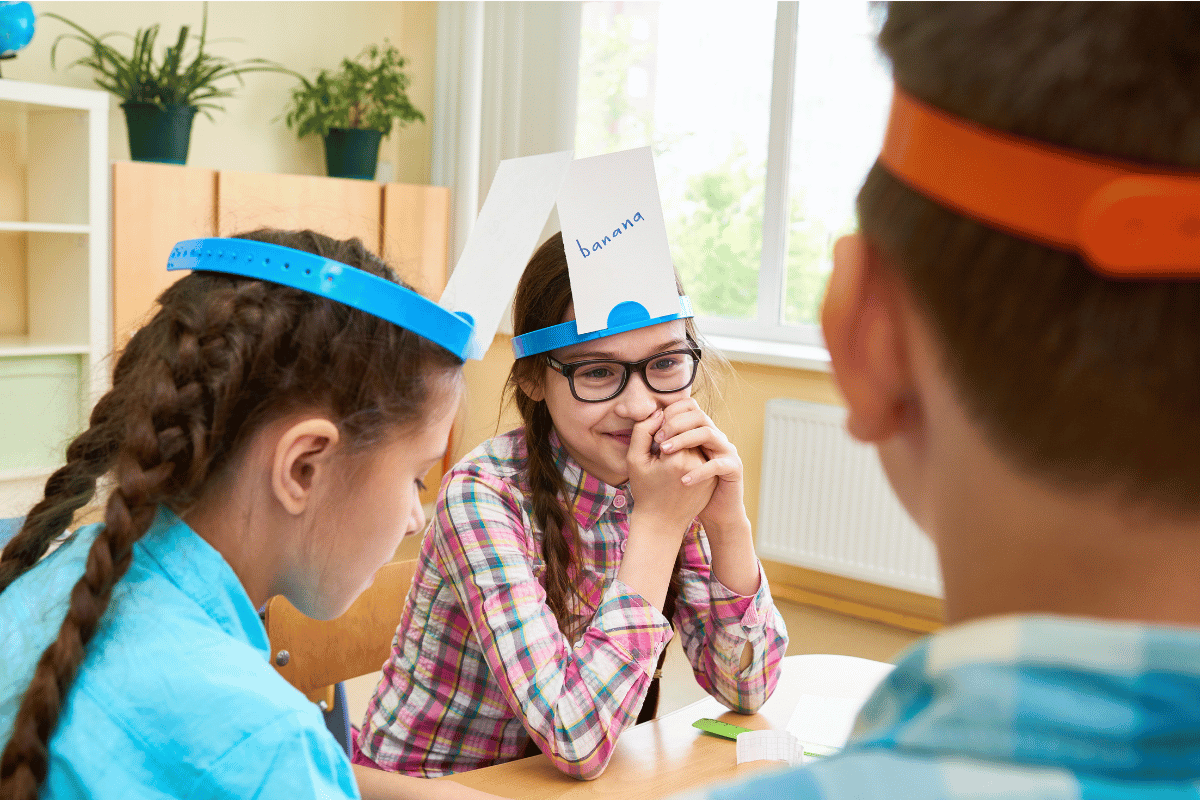
Hot Seat: One student sits facing away from the board while a target word is displayed behind them. Their teammates give verbal clues to help them guess the word. To make the game easier, allow students to start with two or three descriptive words before moving on to full sentences.
Charades: One student acts out a word or phrase without speaking, while the other students guess what it is. Once they guess correctly, ask them to use the word in a sentence or explain how they knew the answer.
Both games encourage students to recall vocabulary, listen carefully, and communicate with their classmates. In addition, the playful atmosphere can make speaking practice feel less intimidating.
For younger learners, start with familiar words and simple clues. As their English-speaking skills improve, introduce more challenging vocabulary and encourage them to give longer explanations.
5. Use Fun ESL Speaking Games and Interactive Activities
You don’t always have to prepare every classroom speaking activity from scratch. Fortunately, several websites offer ready-to-use English games and interactive resources that can save teachers’ time.
Here are two useful websites to explore:
- Wordwall: Find interactive quizzes, vocabulary games, and speaking prompts that you can adapt for pair work, group discussions, or whole-class activities.
- Cool English: Explore English learning activities and games that may help you add variety to your lessons.
Besides using online games, you can also prepare your own speaking cards. Write questions about hobbies, daily routines, personal experiences, favorite foods, or imaginary situations on individual cards.
For example, students might pick a card asking, “If you could travel anywhere in the world, where would you go?” They can then discuss their answers with a partner or in a small group.
These interactive ESL speaking activities give students a clear starting point, which is especially helpful for the quiet ones who struggle to think of something to say.
6. Introduce Daily Vocabulary and Speaking Challenges
Consistency is another important part of improving English speaking skills. Rather than waiting for a special speaking lesson, give your students short opportunities to practice English every day.
One simple idea is a Word of the Day Challenge. Introduce a new vocabulary word and ask students to use it in a sentence. For example, if the word is “adventurous,” students could say, “I am adventurous because I like trying new things.”
Alternatively, try a One-Minute Speaking Challenge. Give students a familiar topic, such as their favorite food, weekend activities, or dream vacation. Then, ask them to speak about it for one minute.
If your students are beginners, let them prepare a few keywords first. Later, as their confidence improves, encourage them to speak with less preparation.
Remember, the goal is not perfect grammar from day one. Instead, focus on participation, vocabulary use, and gradual improvement.
Looking for a visual way to support daily English practice? Explore our Daily English Challenge Set: Printable Classroom Posters. These posters can complement your classroom routines and encourage students to engage with English regularly.

7. Assign Creative English-Speaking Projects
If your students rarely speak beyond answering textbook questions, try giving them a creative project. Speaking projects provide a meaningful reason to use English while allowing students to explore their interests.
Here are four English speaking project ideas you can try in class:
- Podcast project: Students record a short podcast episode about a topic they enjoy, such as music, sports, movies, or school life.
- Cooking demonstration: Students explain the steps for preparing a simple dish using sequencing words such as “first,” “next,” “then,” and “finally.”
- Interview project: Students interview a classmate, teacher, or family member and present the answers to the class.
- Role-play activity: Students act out real-life situations, such as ordering food at a restaurant, asking for directions, or shopping for clothes.
To make these projects more engaging, give students a creative mission. For example, ask them to invent a new Thanksgiving dish, interview classmates to discover who has the most unusual pet, or record a podcast about their favorite fictional character.
Before presenting, let students brainstorm ideas, write notes, and rehearse with a partner. This preparation time helps reduce speaking anxiety and allows students to focus on communicating their message.
8. Pair Students for English Conversation Practice
Speaking in front of the entire class can feel intimidating, especially for shy students. Therefore, pair work is a useful way to create a smaller, more comfortable environment for English conversation practice.
Start by pairing students and giving them a short list of questions to discuss. For example:
- “What do you usually do on weekends?”
- “What is your favorite subject at school, and why?”
- “If you could travel anywhere, where would you go?”
- “What would you do if you found a wallet on the street?”
Encourage students to take turns asking and answering questions. You can also provide follow-up prompts such as “Why do you think so?” or “Can you tell me more?” to help them keep the conversation going.
Furthermore, try changing partners regularly. This gives students opportunities to communicate with different classmates and become more comfortable using English with a variety of people.
For larger classes, you can organize rotating pairs or short speed-conversation sessions. Meanwhile, in smaller classes, give each pair more time to develop their conversations.
Pair work isn’t a guarantee that every student will participate equally, so monitor the activity and make sure both students have opportunities to speak. With clear instructions and supportive feedback, pair conversations can become a valuable part of your regular ESL speaking activities.
9. Praise Students’ Effort and Celebrate Progress
Building speaking confidence takes time. For that reason, students need to know that their efforts matter, even when their English isn’t perfect.
When a student tries to answer a question, use a new vocabulary word, or share an opinion, acknowledge the effort. Instead of correcting every mistake immediately, highlight something they did well.
For example, you could say:
- “Great job explaining your idea!”
- “I like how you used a new word today.”
- “That was a clear explanation.”
Positive feedback helps create a supportive classroom environment where students feel more comfortable taking risks. At the same time, you can still correct important errors gently when they affect meaning or when students are ready for feedback.
If you’re looking for more ideas, read our article What to Say Instead of “Good Job”: 50 Ways to Praise Students.
Ultimately, the goal is to help students recognize their progress and understand that making mistakes is a normal part of learning English.
10. Let Students Write Before They Speak
Here’s a strategy that can be easy to overlook: let students write before they speak. While spontaneous conversation is an important skill, some learners need extra time to organize their thoughts.
First, give students a few minutes to write keywords, prepare short answers, or outline their ideas. Then, let them practice sharing those ideas with a partner before speaking to the whole class.
For example, before a discussion about weekend activities, ask students to write down three things they did over the weekend. Next, have them turn their notes into simple sentences.
You could also provide sentence starters such as:
- “Last weekend, I _____.”
- “The best part was _____ because _____.”
- “Next weekend, I want to _____.”
Once students feel prepared, encourage them to share their answers with a partner. After that, ask a few volunteers to speak to the class.
As students become more confident, gradually reduce the preparation time and introduce follow-up questions. This way, they can develop both prepared speaking skills and the ability to respond spontaneously in English.
Writing before speaking is particularly helpful for beginners and reluctant speakers because it gives them time to find the right words without feeling rushed.
Conclusion: Make English Speaking a Daily Habit
In conclusion, getting students to speak English confidently doesn’t happen overnight, especially for ESL students. However, with patience, consistent practice, and the right classroom speaking activities, you can gradually help even reluctant learners become more comfortable expressing themselves.
You don’t need to use all ten strategies at once. Instead, choose one or two English speaking activities that fit your students’ needs and build from there. Over time, these small steps can help students develop stronger speaking skills and greater confidence.
Whether you’re teaching young learners, beginner ESL students, or students who already know English but rarely participate, remember that every small attempt to communicate is progress.
FAQs
- Can you get shy and quiet students to speak English? Yes, you can. Start with asking simple yes/no questions, and talk about things they like.
- What are the best ESL speaking activities for beginners? Start with “hot-seat” or “charades”
- How long it takes to get students to finally speak fluently and confidently? Depends on every aspect. The most important thing is, give consistent practices and the right method
- Does speaking in pairs help them to speak more? Yes
Looking for more English classroom resources?
Visual resources can complement your speaking lessons by helping students review vocabulary and encounter useful language throughout the day. Start with our collection of 10 Free English Posters for the Classroom.
You can also explore English Classroom Posters for Language Learning and discover more printable classroom resources from Rad Tutor Gallery to support your students’ everyday English learning.