Classroom Routines: How to Get Students to Follow Them
May 8, 2026
Understanding Growth Mindset Principles
A room full of bright and intelligent students is surely what teachers want to see in a classroom. Education can be considered successful when your students can follow your lessons well. But what if your intelligent students don’t have the qualities they need to thrive in difficult situations?
A growth mindset is important for students to develop the personality and mindset they need to face challenges, learn, and grow. A student can be bright, but what if they are afraid to learn something new and always dwell on their mistakes? You need more than just a bright student. Even a student who may struggle academically can strive to improve and reach their goals if they have a growth mindset, such as the willingness to keep trying and never give up.
So, teachers, how can you help your students develop this mindset?
The first step is to introduce these ideas to your students repeatedly. The message needs to become familiar to them so they can gradually understand and apply it. Tell your students not to give up, to learn from their mistakes, to find ways to avoid repeating them, to stay strong and resilient, and to always try to become the best version of themselves. But do you have to keep saying the same things all the time?
Try hanging posters with growth mindset ideas and motivational quotes, along with appealing visuals. These can make your classroom feel more positive and engaging. Students can read the motivational messages on their own and gradually remember them. It is a simple way to keep positive ideas around them every day.
However, teachers also need to show students how to put these ideas into practice. It is okay to feel sad, disappointed, or frustrated when something doesn’t go as planned. But after that, encourage your students to look for a solution, learn from what happened, and keep going.
Keep learning, keep growing, and keep thriving!
Choosing the Right Growth Mindset Posters
Choosing the right classroom posters might seem a little tricky, but it doesn’t have to be when you know what you want and what will work best for you and your students. Visually appealing designs and meaningful content are both important, so make sure you don’t overlook either one.
First, choose a color palette that suits your classroom. Bright and cheerful colors can help classroom posters stand out and catch students’ attention. They can also make important messages easier to notice and remember. However, make sure the colors are still comfortable to look at and that the text is easy to read.
Second, choose classroom posters with images or illustrations. Images are powerful communication tools that can support words and make an idea easier to understand. With the right illustrations, students can visualize the message and connect it to something they see in their everyday lives. This is especially helpful for younger students.
Third, choose meaningful and relevant quotes for your students. Quotes like “Don’t give up!” are positive, but students may hear them so often that they no longer pay much attention to them. Instead, try choosing more specific and relatable messages, such as “Kindness is the new cool.” A quote like this can give students a fresh perspective and encourage them to see kindness as something positive, valuable, and even fun.
When choosing motivational classroom posters, don’t focus only on how attractive they look. Think about what your students need to see, understand, and remember. The best classroom posters combine eye-catching visuals, readable text, and meaningful messages that can support a positive learning environment.
Check also Growth Mindset Classroom Posters for Student Confidence – Rad Tutor Gallery
Incorporating Posters into Classroom Design
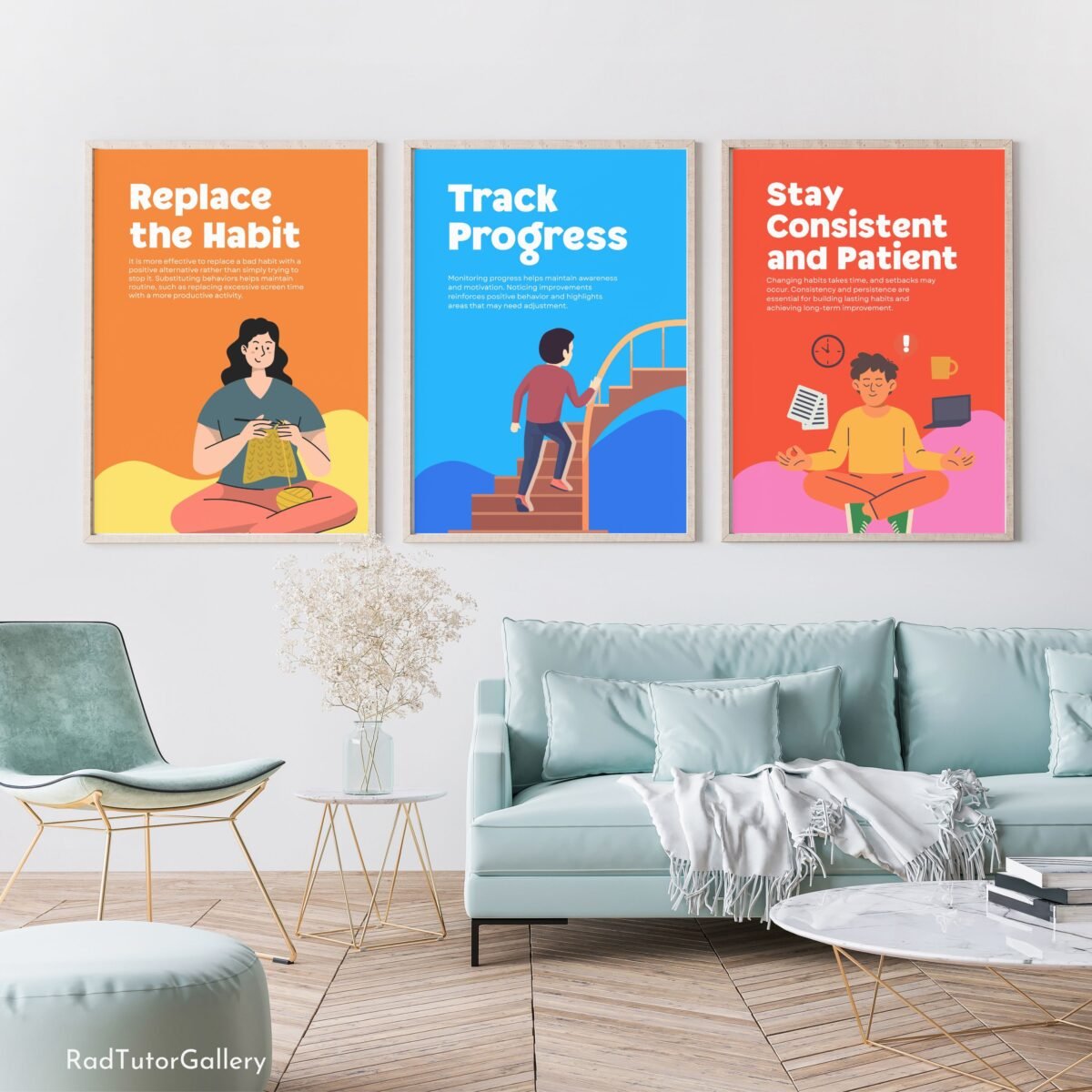
Don’t know exactly where to hang your classroom posters? Choose a spot where your students can easily see and read them, such as a wall they naturally face during lessons. You don’t need an extra-large poster; the right poster size and placement are more important. Make sure the posters are at a comfortable height, not blocked by furniture, and have enough lighting so the text and illustrations can be seen clearly. A well-placed poster can be much more effective than a large one that students can barely see.
Engaging Activities to Reinforce Growth Mindset
Turn a Fixed Mindset Into a Growth Mindset
Write fixed-mindset statements on the board:
“I’m bad at drawing.”
“I always make mistakes.”
“I can’t speak English.”
Students work in pairs to change them into growth-mindset statements:
“I’m still learning to draw.”
“Mistakes help me improve.”
“I can practice speaking English.”
“Yet” Challenge
Give students statements such as:
- “I can’t solve this problem.”
- “I’m not good at English.”
- “This is too difficult.”
Students change each sentence by adding “yet” and discuss what they could do to improve.
Growth Mindset Scenario Cards
Give students short classroom situations, for example:
“Sarah gets a low score on her test and feels like giving up.”
Students discuss:
- How does the student feel?
- What is the problem?
- What could the student do differently?
Almost any classroom activity can become a growth mindset activity if you incorporate growth mindset values into the core of the activity. For example, during a game of charades, students can learn to be patient, keep trying when they struggle, compete while still being fair, and learn from their mistakes. The important thing is to keep the activities enjoyable while making sure they match your students’ level, pace, and needs.
Don’t forget to check out our growth mindset printables here.