
Classroom Posters Every Teacher Should Have | Practical Guide
February 5, 2026
Classroom Decoration Ideas That Won’t Distract Students
February 9, 2026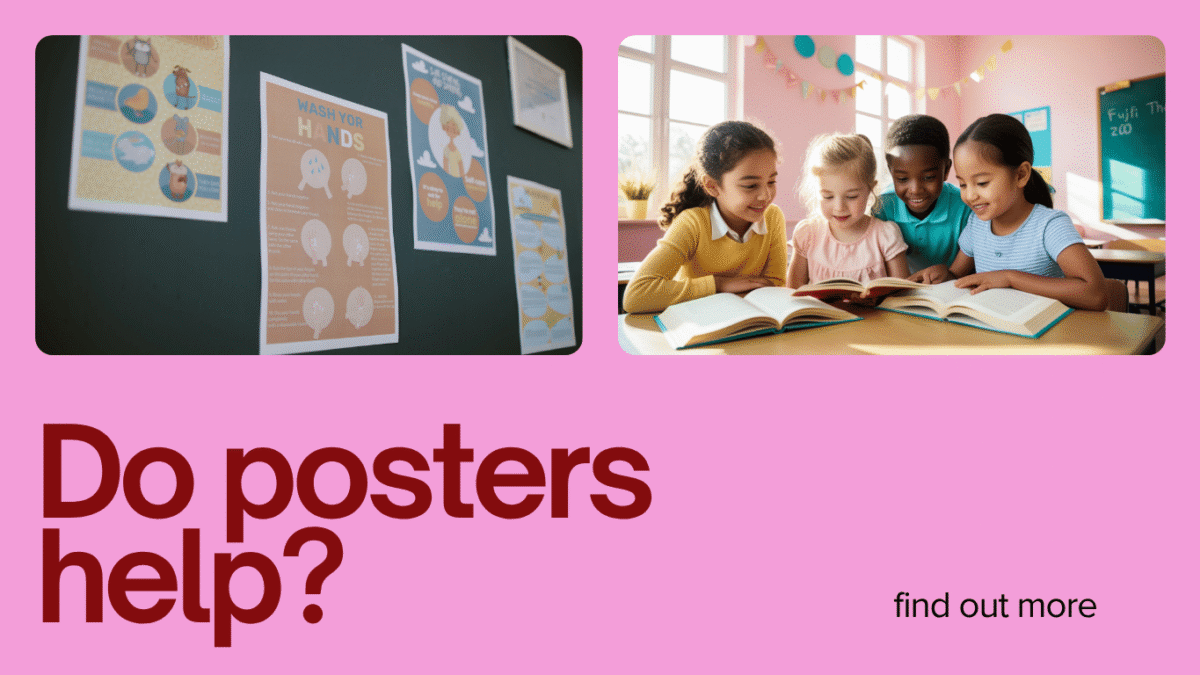
Educators have long relied on visuals to support instruction, but the question remains: do classroom posters actually help students learn, or are they just decoration? Research on visual learning strategies suggests that well-designed educational posters for classroom use can play a meaningful role in comprehension, memory, and student engagement when they are used intentionally rather than as background clutter.
Why Visual Learning Matters in the Classroom
Cognitive science consistently shows that the brain processes visual information faster than text alone. According to dual coding theory, learners understand and retain information more effectively when verbal explanations are paired with visual representations. This is where visual learning posters become powerful tools. Charts, diagrams, timelines, and concept maps provide students with quick reference points that reinforce spoken instruction and written material.
For younger learners, visuals help bridge abstract concepts and concrete understanding. For older students, posters act as cognitive anchors, reminding them of frameworks, formulas, and key ideas without interrupting lesson flow. When thoughtfully designed, posters reduce cognitive load by organizing information clearly and predictably.
Cognitive Benefits of Educational Posters
One of the main benefits of educational posters for classroom environments is their ability to support cognitive processing. Posters help students recognize patterns, categorize information, and make connections across topics. For example, a grammar poster that visually breaks down sentence structure supports language processing more effectively than repeated verbal explanations alone.
Posters also promote independent learning. When students can glance at a wall display to confirm a rule or process, they develop confidence and self-correction skills. This is especially useful in inclusive classrooms where learners process information at different speeds.
Importantly, posters work best when they are relevant and limited in number. Overcrowded walls can overwhelm students and reduce focus. Effective classrooms curate visuals that align with current learning goals rather than displaying everything at once.
Memory Retention and Long-Term Learning
Memory retention is another area where visual tools show strong impact. Repeated exposure to key information in visual form strengthens recall over time. When students regularly see vocabulary words, historical timelines, or scientific processes displayed clearly, those concepts move more easily from short-term to long-term memory.
Color, layout, and typography also matter. High-contrast text, consistent icons, and simple layouts make information easier to remember. This is why professionally designed visual learning posters tend to outperform improvised visuals. They are structured to guide the eye and emphasize what matters most.
In exam preparation settings, posters act as passive revision tools. Even when students are not consciously studying them, repeated exposure reinforces familiarity. This subtle reinforcement can make a noticeable difference in assessment performance.
Classroom Examples Across Grade Levels
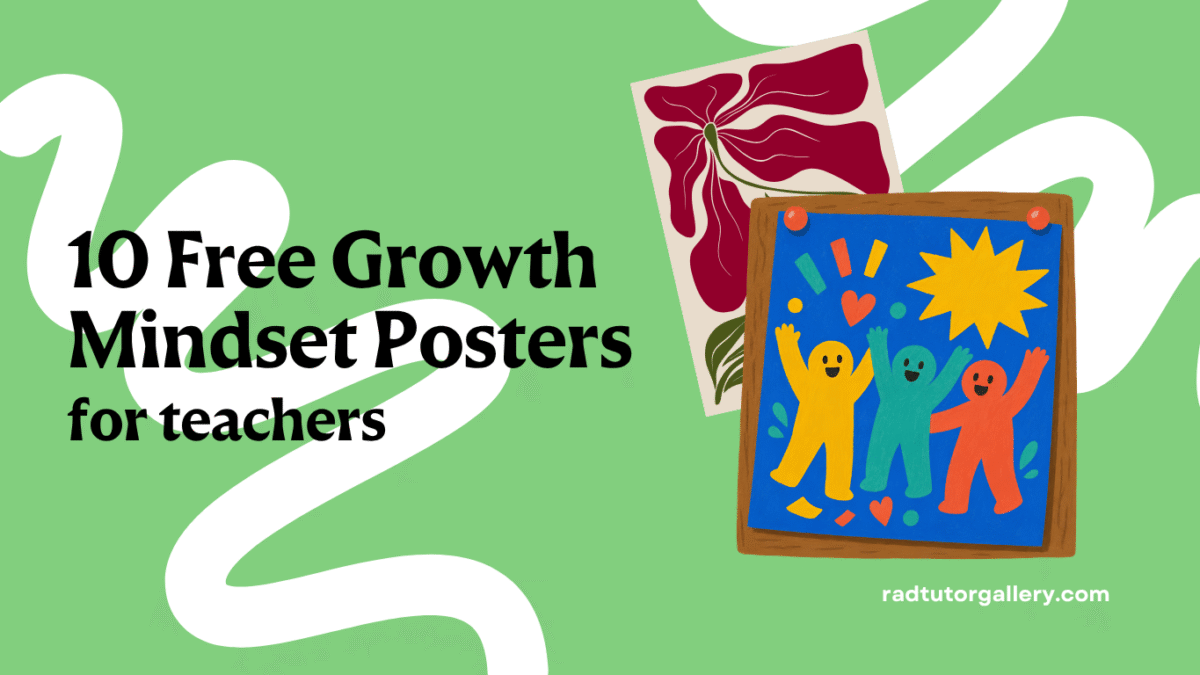
In elementary classrooms, posters often focus on foundational skills. Alphabet charts, number lines, growth mindset statements, and behavior expectations provide structure and reassurance. These visuals support routine-building and help young learners feel secure and oriented.
In middle school settings, posters become more content-specific. Science classrooms may display the scientific method, lab safety rules, or ecosystem diagrams. Language classrooms often rely on grammar rules, sentence starters, and literary devices. These educational posters for classroom use help students apply concepts during independent and group work.
High school classrooms benefit from posters that summarize complex ideas. Historical cause-and-effect charts, mathematical formulas, and writing frameworks support higher-order thinking by keeping essential references visible. In these settings, posters are most effective when teachers explicitly reference them during instruction, reinforcing their relevance.
Supporting Student Engagement
Beyond cognition and memory, posters also influence student engagement. A visually organized classroom signals care, structure, and professionalism. Students are more likely to participate in an environment that feels purposeful and supportive rather than chaotic or bare.
Motivational and social-emotional posters can also shape classroom culture. Clear expectations, encouraging language, and inclusive visuals help students feel seen and supported. When combined with academic content, these displays contribute to a balanced learning environment.
Engagement increases further when posters reflect the curriculum students are actively working on. Rotating displays based on units or themes keeps visuals fresh and meaningful rather than ignored.
Flexibility Through Printable Resources
Teachers often choose printable educational posters because they can be aligned with lesson goals and updated easily. Printable resources allow educators to adapt visuals to pacing, standards, and student needs without committing to permanent displays.
Printable posters are especially useful for seasonal units, test preparation periods, or differentiated instruction. Educators can swap them out as topics change, ensuring that wall space always supports current learning objectives.
Many teachers look for printable options that are both academically sound and visually clean. Shops that specialize in classroom-focused designs make it easier to find posters that match curriculum standards while maintaining a cohesive classroom aesthetic. When browsing educational resource shops, educators often prioritize clarity, age-appropriateness, and alignment with real classroom use.
So, Do Classroom Posters Help Students Learn?
The evidence suggests that classroom posters do help students learn when they are used intentionally. Educational posters for classroom environments support visual processing, improve memory retention, and enhance student engagement. Their effectiveness depends not on quantity, but on relevance, design quality, and integration into daily instruction.
Posters should be treated as instructional tools rather than decoration. When aligned with learning goals and referenced regularly, they become quiet but powerful partners in teaching. For educators seeking flexible, high-quality resources, thoughtfully designed printable posters offer a practical way to support learning while keeping classrooms dynamic and responsive.
In short, classroom posters are not a shortcut to learning, but when used well, they are a proven support that helps students see, remember, and engage more effectively.
- Art21 products
- Class Management26 products
- English160 products
- Growth Mindset76 products
- History68 products
- Kids8 products
- Math20 products
- Music18 products
- PE20 products
- Science81 products
- Social Studies62 products